
Shibori is the Japanese technique of resist dyeing that yields the beautiful patterns found in clothing or textiles. Shibori designs are achieved by folding, stitching, binding, or compressing fabric to prevent the indigo dye from penetrating certain parts of the garment. The result is crisp white designs on a blue background, or shades of indigo resembling water ripples, and frost on leaves. To create Shibori designs, fabric, usually cotton, linen or silk, is carefully folded, twisted, or gathered and then bound by thread, clamps, or string. The fabric is then submerged in an indigo dye bath, where each fold in the fabric acts as a resist, leaving areas untouched by the dye the natural color of the garment. Through successive submersion in the indigo vat, the fabric develops layers of indigo, resulting in a spectrum of sky blue to midnight. While the resist areas of Shibori give the designer control over the pattern, the unpredictable nature of the dye seeping through the folded fabric ensures that each piece is one-of-a-kind.
Shibori is often associated with indigo, but contemporary artisans use synthetic dyes, too, and also experiment with colors and folding techniques to create patterns that range from graphic grids to wispy clouds. Newbies usually begin with itajime, which involves folding fabric into geometric shapes with wooden blocks, or with arashi, which involves wrapping fabric around a pole to create diagonal raindrop-like patterns. Once you get the hang of tension and color absorption, you can graduate to stitched shibori (nui shibori) with its thread-based florals and wave patterns. The folding and binding process can be meditative, and the studio can become a contemplative space. And then there’s the fun of untying and rinsing your fabric to discover the beautiful balance of positive and negative space. It’s this element of suspense that draws practitioners back for more, and with each project, you’ll gain a better understanding of how varying degrees of pressure and dye will impact your design.
Another reason for shibori’s timeless charm is the universality of its application, from clothing to home decor to art, and that the patterns themselves convey an understated elegance whether your style is minimalist or bohemian. For example, scarves or a kimono jacket exhibit how the dyed fabric hangs and that the gradual fading of the dye over the years only adds to the beauty. A wall hanging or pillow can present a dramatic motif, which changes depending on the light, and adds a quiet drama to a room. Another factor is that the traditional way of fermenting the indigo (in vats made from fermented plants) is sustainable. As makers become increasingly interested in responsible ways of producing, shibori can be a way to explore those values. Online forums facilitate the shibori community’s willingness to share information about vat recipes, color longevity, and how to address less than perfect dyeing, creating a collaborative spirit among practitioners.
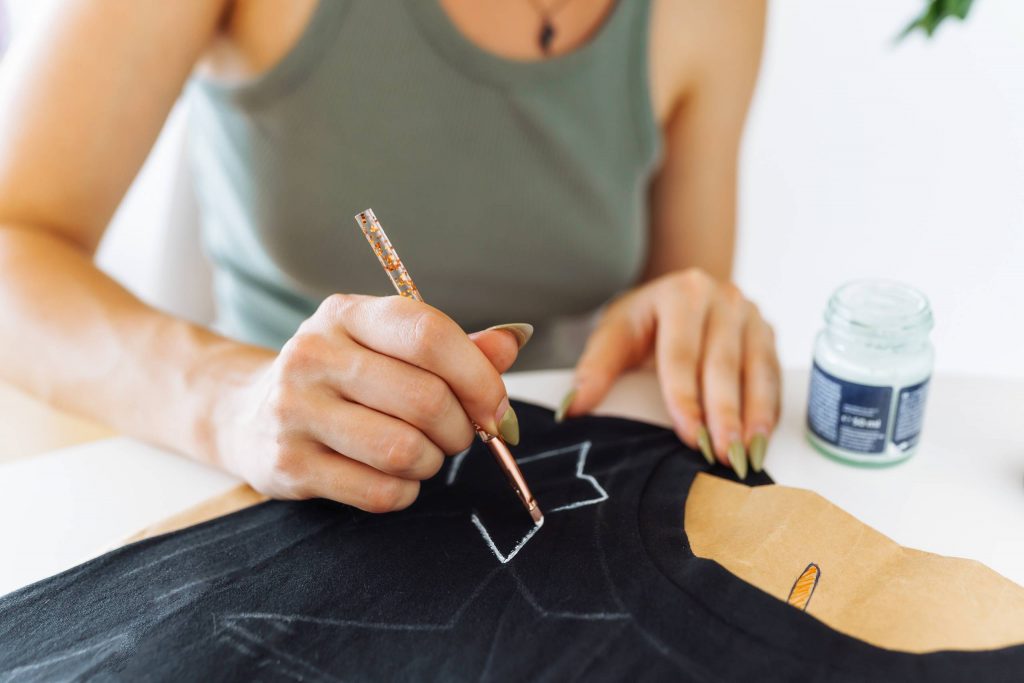
Unlike most other fabric painting techniques, in which colors are applied to the fabric with a brush or pen, shibori folding techniques involve shaping the fabric to create the desired pattern. This means that the fabric is, in effect, designing itself, rather than having a design imposed upon it. This inevitably leads the practitioner to develop a deep respect for the materials involved, and to learn the value of minimalism and simplicity. With experience, the practitioner also gains an appreciation for the effects of different materials: for example, silk produces softer, more subtle textures, whereas cotton lends itself to more graphic, contrasted designs. This helps the practitioner to develop their ideas in advance of the dyeing process, while still allowing for an element of chance. In this way, shibori folding can be a meditative and highly rewarding pastime.
By adopting shibori, artists and designers become part of a tradition that prizes balance, imperfection, and patience. The finished work bears traces of the fingers that folded it, of the slow ferment of the indigo, and of the waiting hours; it is not just beautiful, but significant. From classic techniques to innovative methods of resist, the possibilities for discovery are endless, and those who seek to master the art are repaid with a language both timeless and contemporary.