
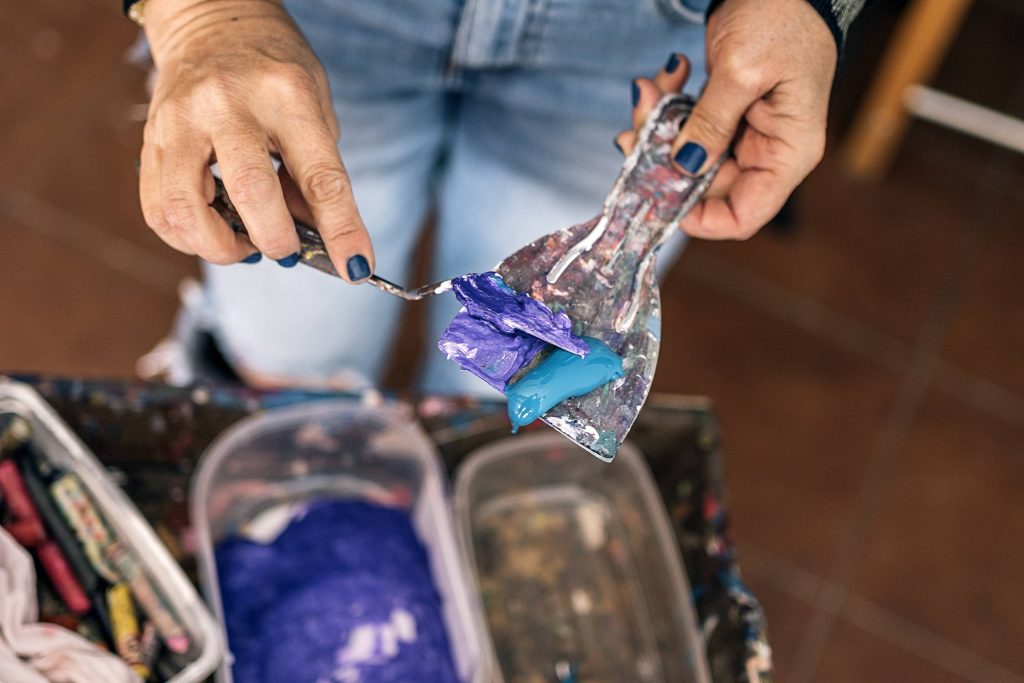
The Serti technique is the epitome of control and joy. It involves stretching silk over a frame, which provides the smoothest surface possible for painting. A guide is applied to the silk so that it acts as a resist to the dye, keeping the colors from running. This technique allows you to achieve the sharpest, brightest designs. It’s an exercise in perfection and I personally find it very soothing.
Serti (from the French word for “enclosure” or “frame”) is a contemporary silk-painting technique, adapted from Asian silk-painting traditions. It’s used to create very sharp-edged, vibrant works of art with the detail of a fine painting. A resist (or gutta) is applied to the fabric in a liquid form (usually through a small metal tip called a tjanting or a squeeze bottle) to create an outline or a boundary. The gutta dries to form a resist barrier that holds the dye inside the outlined area. Silk paint or dye is then applied by brushing, dropping, or pouring it into the enclosed resist areas. The dye flows and spreads across the silk fibers but cannot penetrate the resist barrier. It resembles a watercolor effect within a resist outline. Because the dye spreads within a confined boundary, it can become very concentrated without spreading into adjacent areas, creating rich colors and subtle color gradations that display a jewel-like brilliance when held to the light or worn. The process usually starts with a piece of silk fabric (often habotai or crepe de chine) stretched tightly on a frame.
What sets serti apart from other fabric painting techniques is the balance between the free and the controlled, much like silk itself is a paradox of strength and fragility. A serti student starts with basic geometric designs or simple flower motifs, honing their lines and mastering the gutta flow to achieve the perfect line, thin but unbroken. As they gain experience, they may introduce salt (coarse salt sprinkled on wet dye creates starburst patterns) or alcohol (mixing with dye yields ombre effects) to their dye work. Results are left to settle and dry—a waiting game that requires careful note of conditions like heat, moisture and dye strength. The finished silk is heat fixed in a clothes dryer or with an iron to make the colors permanent, and the fabric will keep its original brightness after years of hand washing.
The beauty of serti is found in the glowing, transparent and colorful silk that when hung in a window or made into flowing garments, give a sense of luminosity that can’t be achieved on paper. Serti is ideal for clothing, loose flowing garments, scarves and ties where the fabric flows when the wearer moves, with the designs and patterns moving with the body. Larger designs can be made and framed, or mounted in lampshades to hang in a window and viewed from both sides. Natural light highlights the different layers of color in the design and often shows undertones of the dyes that aren’t apparent when viewed in artificial light. Serti designs are also useful for incorporating specific symbols or emotional imagery into the patterns. Each silk can be an expressive artwork rather than just a pretty picture. On line communities share information about where to buy the best gutta and paints, how to deal with bleeding gutta and flowlines, and other ways to use the techniques in conjunction with freehand work.
As you become more skilled in serti, you will also become more skilled at graphic design and the beauty of “less is more.” Serti is based on strong graphic lines, contained color and planned color usage. It requires calm, gentle preparation, an intuitive feel for the texture of silk and tools/mediums that are used on it, as well as a meditative peaceful approach. If you like using a computer in a frenetic manner, this medium is not for you. If you enjoy creating beauty and handling the best quality natural fibers, serti may be for you!
Ultimately, serti is a journey to mastery that combines technical exactness with spontaneous creativity. For those who appreciate the intricate and the colorful, serti is an ancient yet intimate practice that beckons. The craft gives those who try it small jewels and meditations that are illuminated, peaceful, and warm, a perfect reflection of the beauty of silk in all its splendor.